
Dustless Floor Sanding in Bakersfield, CA
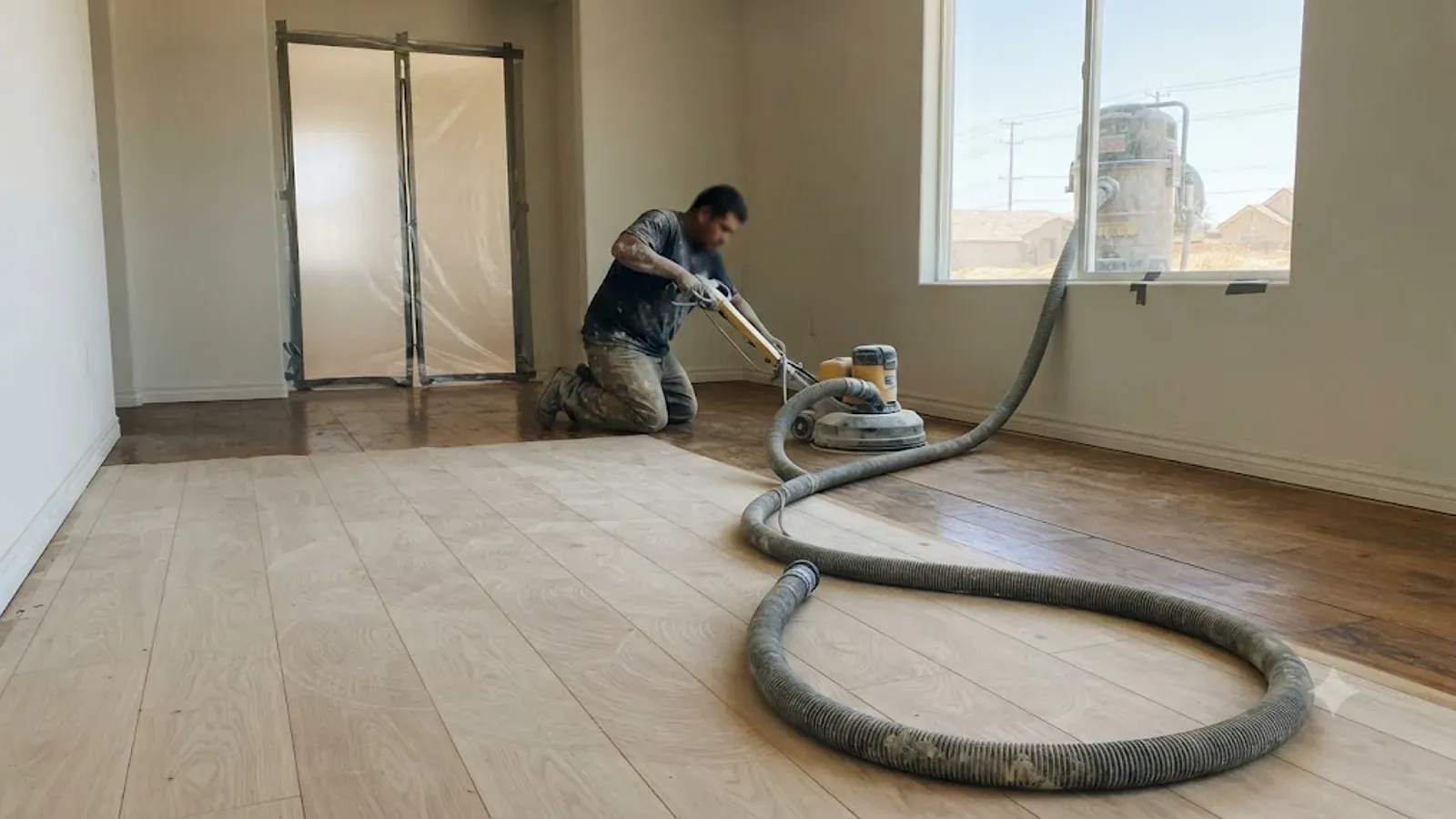
Bakersfield Premium Wood Flooring performs dustless floor sanding in Bakersfield, CA using shrouded machines tied to an outdoor HEPA collection unit, on every sanding job we run. It captures the large majority of the dust at the source instead of putting it in your air, your ductwork, and the top of every cabinet in the house.
We are going to be straight with you about the word dustless, because the industry is not. It is not literally dust-free. Corners get hand-scraped and fine particles always escape somewhere. What it is, is dramatically cleaner — and in a valley with the air quality this one has, that matters more than the marketing term does.
Dustless Sanding Equipment and How the Containment Works
Every machine we run — the belt sander, the edger, the buffer — has a shroud around the abrasive and a port that feeds a collection hose. Those hoses run to a HEPA-filtered collection unit that sits outside the house, usually in the driveway or on a side patio. The dust never enters your indoor air because the vacuum path never terminates indoors.
That last part is what separates a real system from a shop vac with a bag on it. Plenty of contractors call themselves dustless because their sander has a dust bag. A bag captures the coarse material and blows the fine particulate — the part that stays airborne for hours and ends up in your lungs and your HVAC — straight back into the room.
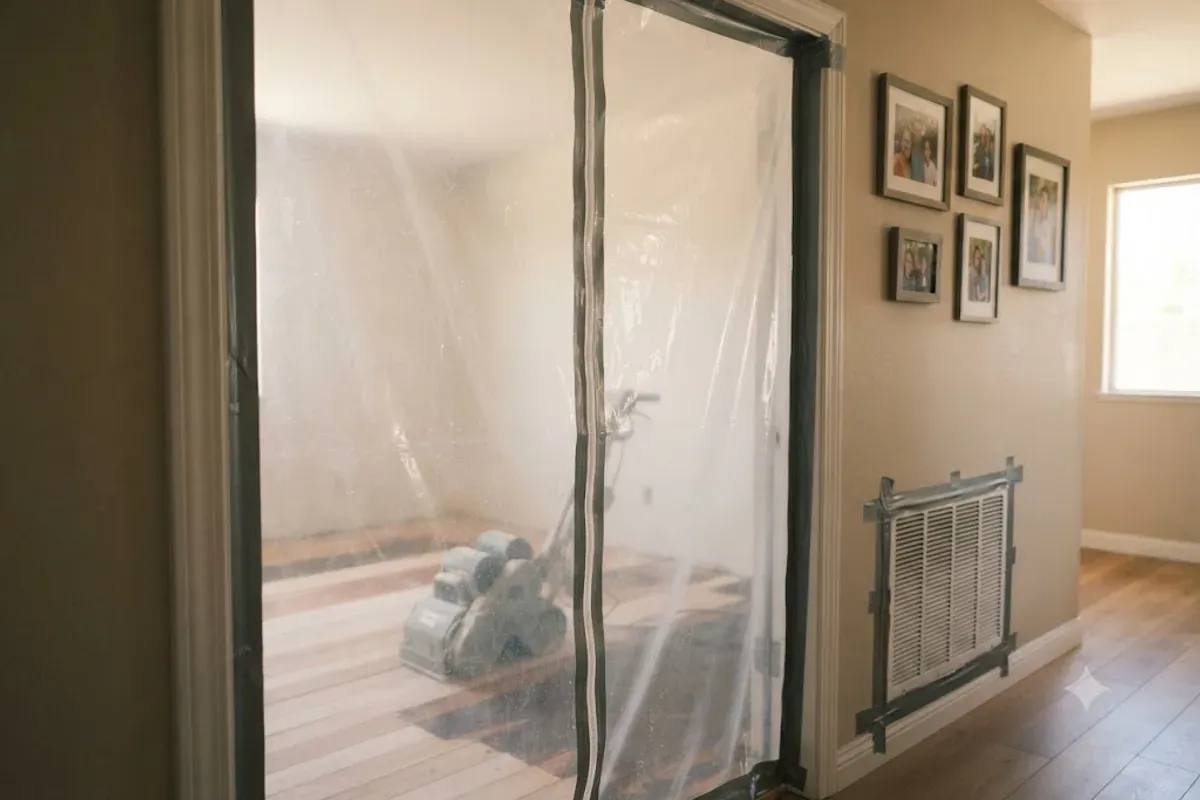
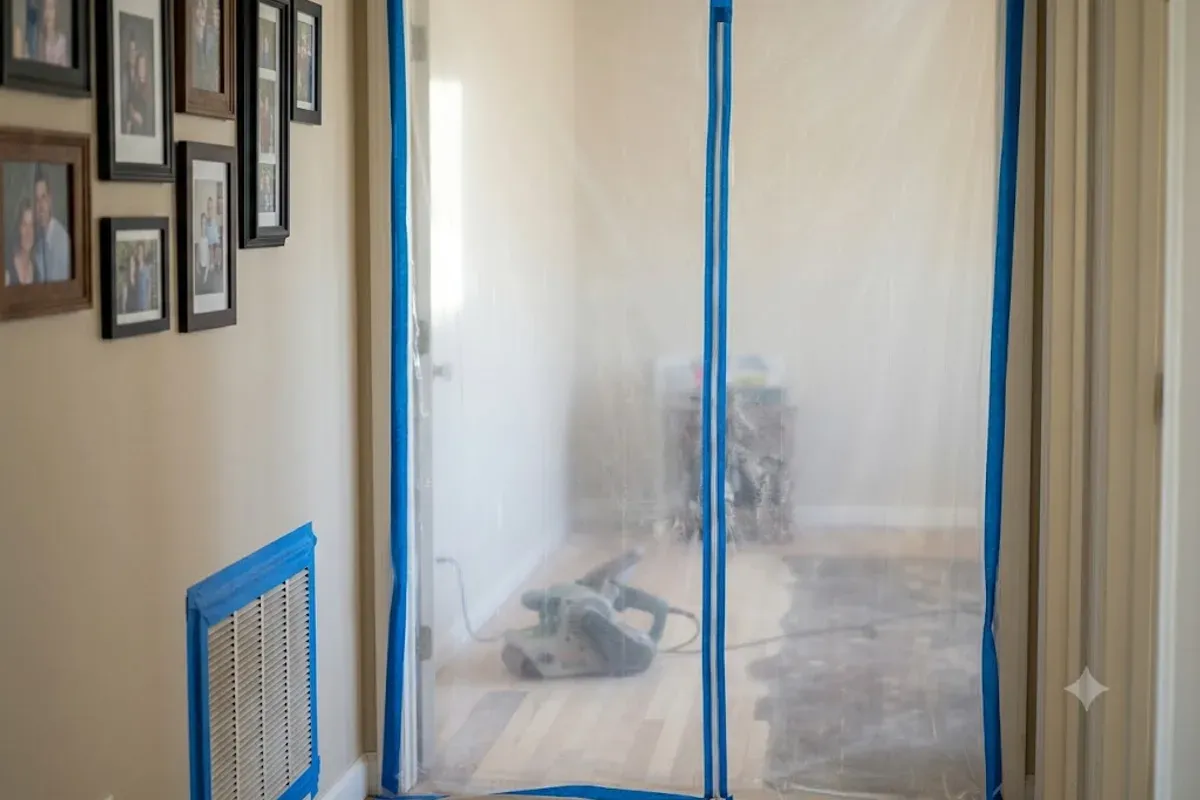
On top of the machines, we build a containment envelope. Zippered plastic sheeting taped floor to ceiling across every doorway leading out of the work area. Return air vents and supply registers taped over so the system cannot pull sanding dust into your ductwork and redistribute it through the house for the next year.
Between grits we vacuum the floor and the baseboards rather than sweeping, because sweeping just relaunches everything you spent the morning collecting. It adds maybe twenty minutes per room and it is the difference between a clean job and a job that looks clean until the light changes.
Why Dust Control Matters More in the San Joaquin Valley
Bakersfield does not need help making particulate. We sit at the south end of a valley that traps everything, ringed by mountains, downwind of agriculture, with tule fog holding the air in place from November through March. Adding a few pounds of airborne wood dust to that, inside a closed-up house, is not a neutral act.
Wood dust is also a respiratory irritant in its own right, and oak dust in particular is classified as a carcinogen with long-term occupational exposure. That is a bigger deal for us than for you — our crews are in it every day and wear fitted respirators. But it is a real reason to take containment seriously in an occupied home, especially one with kids or anyone with asthma.
There is a practical angle too. Sanding dust is abrasive and it is sticky. It settles into the top of upper cabinets, into the tracks of sliding doors, on the blades of ceiling fans, and inside light fixtures. Homeowners who have been through a traditional sanding job will tell you they were still finding it a year later. That cleanup has a cost, and it does not show up on anybody's estimate.
The realistic outcome with a proper system is that you wipe down horizontal surfaces once when we leave and you are done. Most customers are back in the room within 24 to 48 hours of the last coat, and the rest of the house never had to be shut down at all.
Dustless Sanding for Occupied Homes and Businesses
About two thirds of our sanding jobs happen with people still living in the house. Containment is what makes that possible. We work room by room, seal as we go, and keep a clean path from the front door to the work area so nobody is tracking abrasive grit across the rest of your floors.
For commercial work — the restaurants downtown, offices off Truxtun, retail on Stockdale — dust control is a scheduling tool. A sealed work area means adjacent tenants stay open. We routinely sand Friday night, coat Saturday, coat again Sunday morning, and have a dining room back in service Monday.
If anyone in the house has asthma, COPD, or a serious dust allergy, tell us at the estimate. We add a negative air machine to the work area, which pulls a slight vacuum so air moves into the sealed space rather than out of it, and we schedule the noisiest and dustiest phase for a day you can be elsewhere.
One thing we will not do is promise you zero dust. Anybody who does is either lying or has never hand-scraped a corner. What we will promise is that you are not cleaning gray film off your kitchen cabinets two months from now.
How We Set Up a Dustless Sanding Job
- 1
Seal the Work Area
Zippered plastic sheeting taped floor to ceiling in every doorway, with a single controlled entry point. Furniture out or fully wrapped.
- 2
Tape the HVAC
Return air vents and supply registers covered so the system cannot pull dust into the ducts and redistribute it through the house later.
- 3
Stage the Collector Outside
The HEPA collection unit goes in the driveway or on a patio, with hose run through a window or door port. The vacuum path never ends indoors.
- 4
Sand Through the Grit Sequence
Belt sander, edger, and buffer all shrouded and connected. Corners and stair nosings hand-scraped, which is the one part no system captures.
- 5
Vacuum, Do Not Sweep
Floor, baseboards, and window sills vacuumed between every grit change. Sweeping puts the fine particulate right back in the air.
- 6
Tack Before Finish
A final vacuum plus a tack pass immediately before the first coat, because a single grain of grit under finish is visible forever.
Dustless Floor Sanding — Common Questions
Is dustless floor sanding really dust-free?
+
Does dustless sanding cost more?
+
Can I stay in my house during dustless sanding?
+
Do you tape off the air vents?
+
What about my furniture and belongings?
+
Get a Free Dustless Sanding Estimate
We will look at the floor, the layout, and how the house is occupied, then tell you exactly how we would contain it. Mon-Fri 7am-5pm, Sat 8am-2pm.