
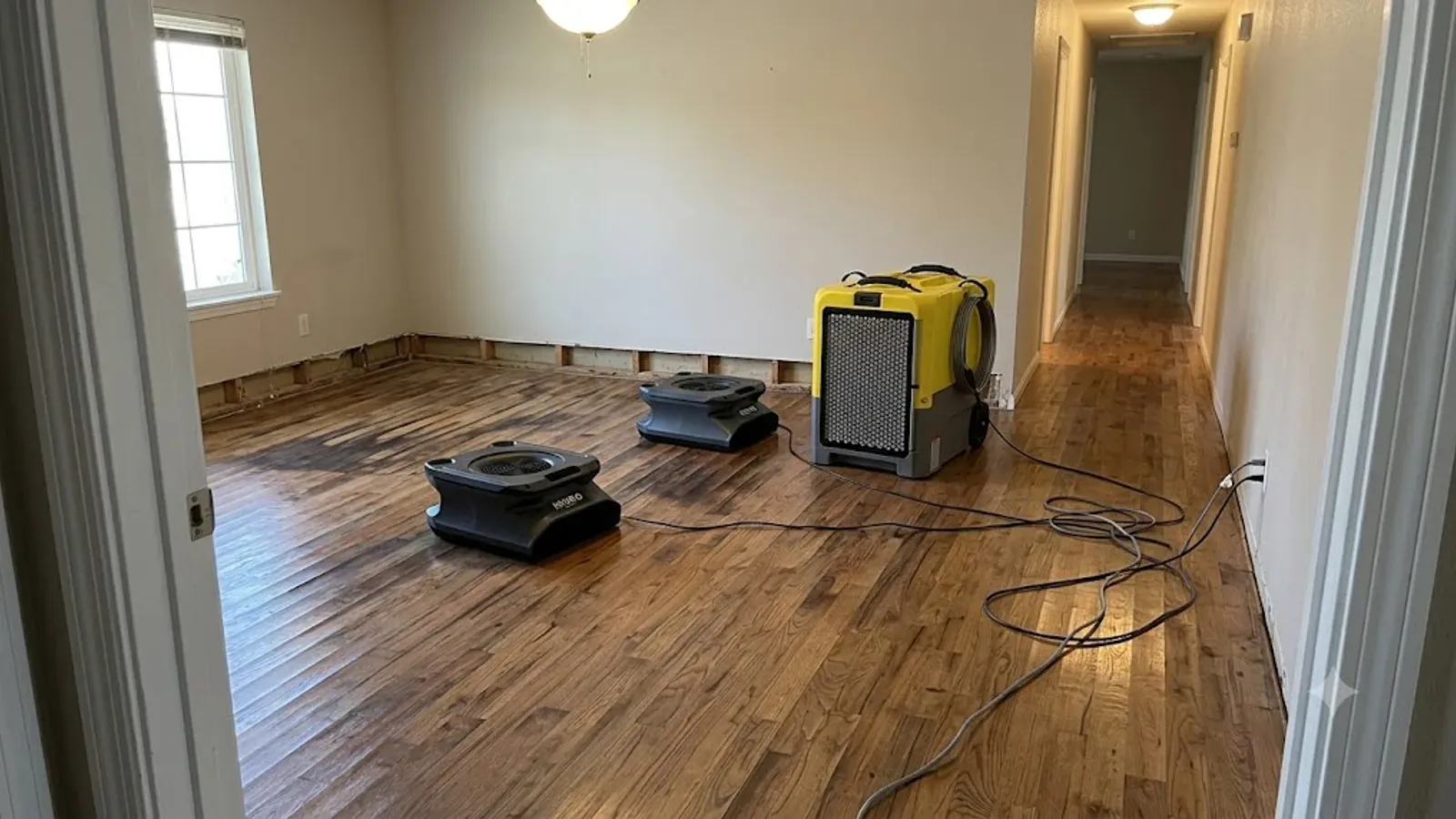
Water Damage Floor Restoration in Bakersfield, CA
Bakersfield Premium Wood Flooring provides water damage floor restoration in Bakersfield, CA, and we treat it as the time-sensitive job it actually is — meter first, dry to spec, then repair only what genuinely failed. Caught inside the first several days, most cupped hardwood dries flat and sands out. Left a month, it does not.
The instinct when a floor gets wet is to start pulling boards. That is usually the wrong first move. Wood that has swelled will shrink back as it dries, and boards that look ruined on day two are frequently fine on day ten. What is not recoverable is a floor nobody dried at all.
Water Damage Sources We See in Bakersfield Homes
Slab leaks are the big one here. Copper supply lines run inside or under the slab in a lot of homes built from the 1960s through the 1980s, and when one develops a pinhole the water has nowhere to go but up through the concrete and into whatever is glued or laid on top of it. The tell is a warm spot on the floor, an unexplained jump in the water bill, or cupping that starts in the middle of a room instead of near a fixture.
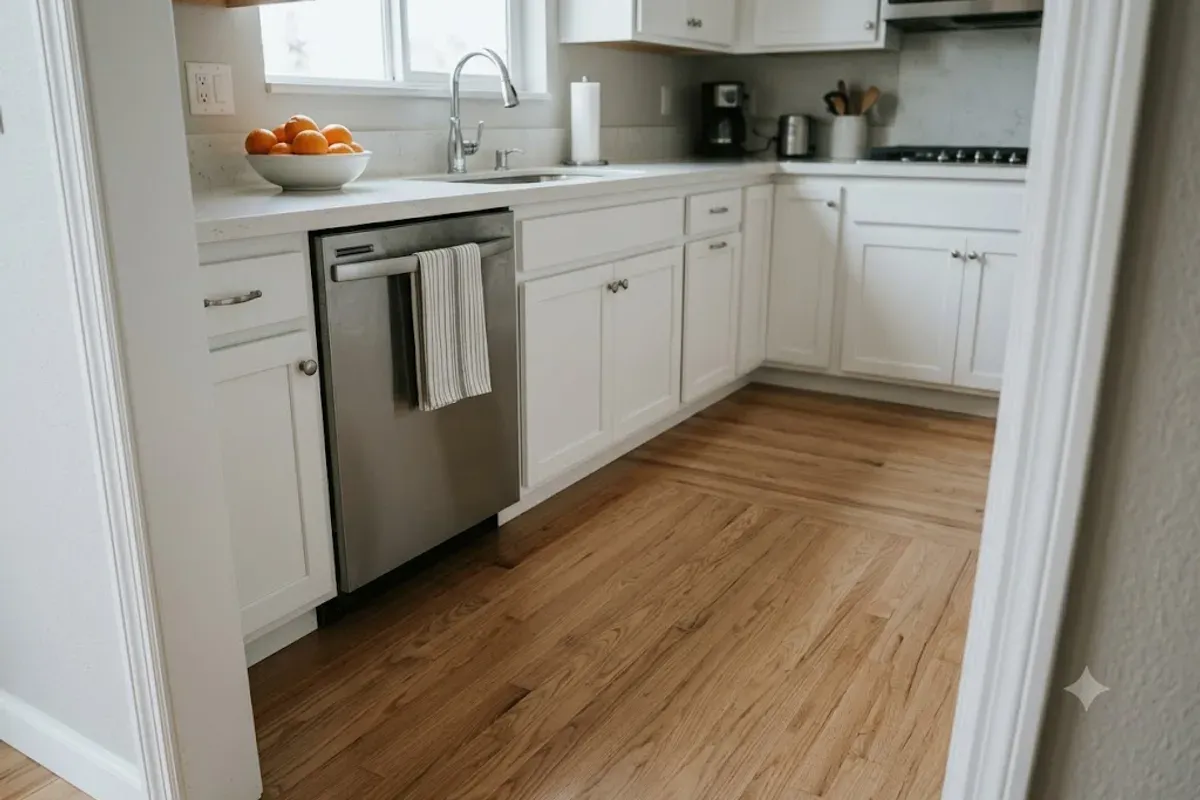
Appliance failures are the most common by count. Dishwasher supply lines, refrigerator ice maker lines, washing machine hoses. These leak slowly, behind or under something, and by the time a board cups the subfloor has usually been wet for weeks. The damage pattern is a rough oval spreading out from an appliance.
Then there is a Bakersfield specialty: evaporative cooler overflow. A swamp cooler on the roof with a stuck float valve will run water down an interior wall and out across a hallway floor, and because it happens in July nobody is expecting water. We get several of these calls a summer.
Roof and window leaks show up less often here for obvious reasons, but when they do it is usually during one of the atmospheric river events that dump a meaningful fraction of our 6.36 annual inches in a couple of days. Those floors have been wet in a narrow band along an exterior wall, often under a rug nobody moved.
Drying, Metering and Knowing What Is Actually Salvageable
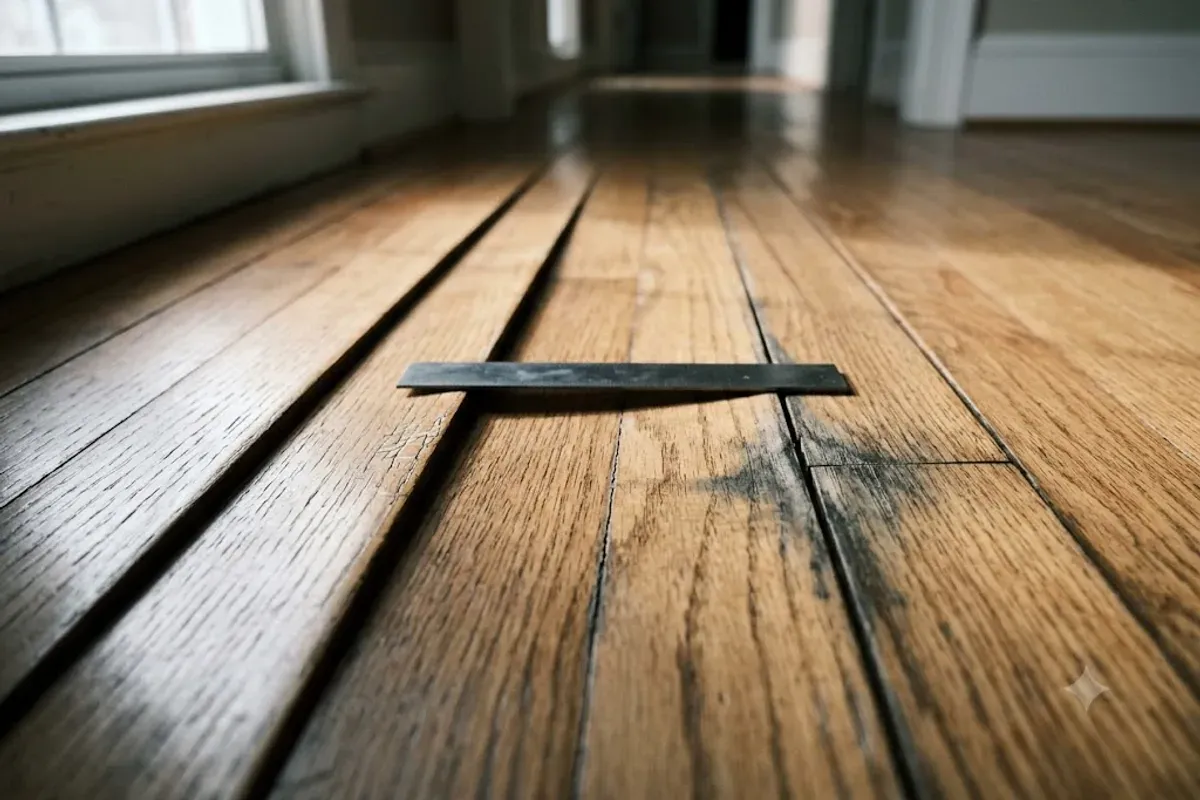
The first thing we do is find and stop the source. Restoring a floor over an active leak is throwing money away, and we will tell you to get a plumber on it before we do anything but set up drying equipment.
Then we meter — the boards, the subfloor, and where we can reach it, the framing. Those numbers are the entire basis for what happens next. A hardwood floor in a Bakersfield house normally sits around 6 to 9 percent moisture content. Wet, it can read 20 percent or higher. Our job is to bring it back down slowly enough that the boards do not crack on the way.
Drying is air movers pushed along the board direction plus a dehumidifier pulling moisture out of the room, running for days, with readings taken every day and logged. Slow and steady matters. Blast a wet floor with heat and aggressive airflow and you get checking and splitting instead of a floor that comes back flat.
Once the numbers stabilize, we decide. Boards that dried flat get sanded and refinished. Boards that cupped, dried, and then crowned or cracked get replaced. Subfloor that stayed soft gets cut out and rebuilt. Frequently the honest answer is that eleven boards need replacing and the other 400 square feet are fine, which is not what a tear-out quote will tell you.
Insurance Claims, Documentation and Timelines
Most water damage floor jobs run through a homeowner's insurance claim, and the claim goes better when the documentation is good. We photograph the affected area before we touch anything, log daily moisture readings during drying, and provide an itemized scope that separates emergency drying from restoration from refinishing.
Adjusters ask two questions: what caused it, and was it addressed promptly. Sudden and accidental discharge — a burst supply line, a failed appliance hose — is typically covered. Long-term seepage that was visible and ignored typically is not. That distinction is why calling on day one rather than week three matters financially as well as physically.
Timelines are honest but not fast. Drying alone is generally 3 to 7 days depending on how much water and how long it sat. Repairs are a day or two. Then the sand and refinish is another 3 to 5. Most complete jobs land between one and two weeks from the day we start.
If a floor is actively wet right now, call rather than filling out a form. Every day the water sits, the number of boards that can be saved goes down.
How a Water Damage Restoration Runs
- 1
Stop the Source
We identify where the water is coming from and get it shut off. If it needs a plumber, we say so immediately rather than working around an active leak.
- 2
Document Everything
Photographs of the affected area before any work, plus initial moisture readings on boards, subfloor, and framing. This is what an insurance adjuster will ask for.
- 3
Set Drying Equipment
Air movers oriented along the board direction and a dehumidifier sized to the space. Baseboard pulled where trapped moisture needs an escape path.
- 4
Meter Daily
Readings taken and logged every day until they stabilize at normal levels. We do not start carpentry until the numbers say the floor has stopped moving.
- 5
Assess What Failed
Boards that dried flat stay. Boards that crowned, cracked, or delaminated get replaced. Soft subfloor gets cut out and rebuilt from the joists up.
- 6
Repair and Lace In
Replacement boards matched by species, cut, and width, laced into the existing field with staggered joints rather than dropped in as a block.
- 7
Sand and Refinish
The full room sanded as one surface and coated, so the restored area and the original floor come out the same color and sheen.
Water Damage Floor Restoration — Common Questions
Can a water damaged hardwood floor be saved?
+
How long does it take to dry a wet wood floor?
+
Will my insurance cover water damage to my floors?
+
Should I pull up the wet boards myself?
+
Do you do emergency response?
+
Water on Your Floor Right Now? Call.
Every day the water sits, fewer boards survive. Call and we will get drying equipment in place, then quote the restoration once we know what actually failed. Mon-Fri 7am-5pm, Sat 8am-2pm.